By Laura McElhinney, Chief Data Officer
Agentic AI promises a world where intelligent systems execute workflows autonomously, make decisions in real time, and drive outcomes at scale. It’s compelling, and it’s coming fast. But as enterprises rush to adopt these technologies, many are discovering an inconvenient reality: the biggest barrier isn’t the AI itself. It’s the foundation beneath it.
The Problem Is Structural
After years working alongside marketing and advertising teams pursuing automation, I’ve seen a familiar pattern emerge. Organizations invest in sophisticated agents, only to watch them stumble or stall once deployed. Not because the models lack intelligence, but because they’re forced to operate inside fragmented, disconnected ecosystems.
Most enterprises simply aren’t built for agentic systems. Decades of accumulated data debt, sprawling tech stacks, and brittle point-to-point integrations create environments where automation can’t thrive. Platforms don’t communicate cleanly. Data lives in silos, defined differently across teams. Integration layers crack under pressure. This isn’t just technical friction, it’s a structural failure. And it’s a trust failure.
Agents Aren’t Superpowers. They Are Specialists.
Agentic AI depends on continuous, high-fidelity information flow. When that flow is broken, automation never reaches its potential. Worse, teams lose confidence in the insights being generated, second-guessing recommendations and reverting to manual processes. Trust in AI isn’t built on model sophistication alone. It’s built on the reliability of the data and infrastructure supporting it.
Another misconception holding organizations back is the idea of a single, all-knowing AI agent. That’s not how effective agentic systems work. The future is an ecosystem of specialized digital workers, each optimized for a specific function. One agent refines audiences. Another optimizes creative. A third manages media execution. Real value emerges when these agents can pass intelligence seamlessly between one another, preserving context and building momentum.
Without strong connectivity, organizations recreate a digital game of telephone. Signal degrades. Context disappears. Decisions drift away from the insights meant to guide them. Automation becomes noise
Connectivity Is The Multiplier
For agentic AI to work at scale, agents must be able to:
- Discover data across platforms without manual mapping
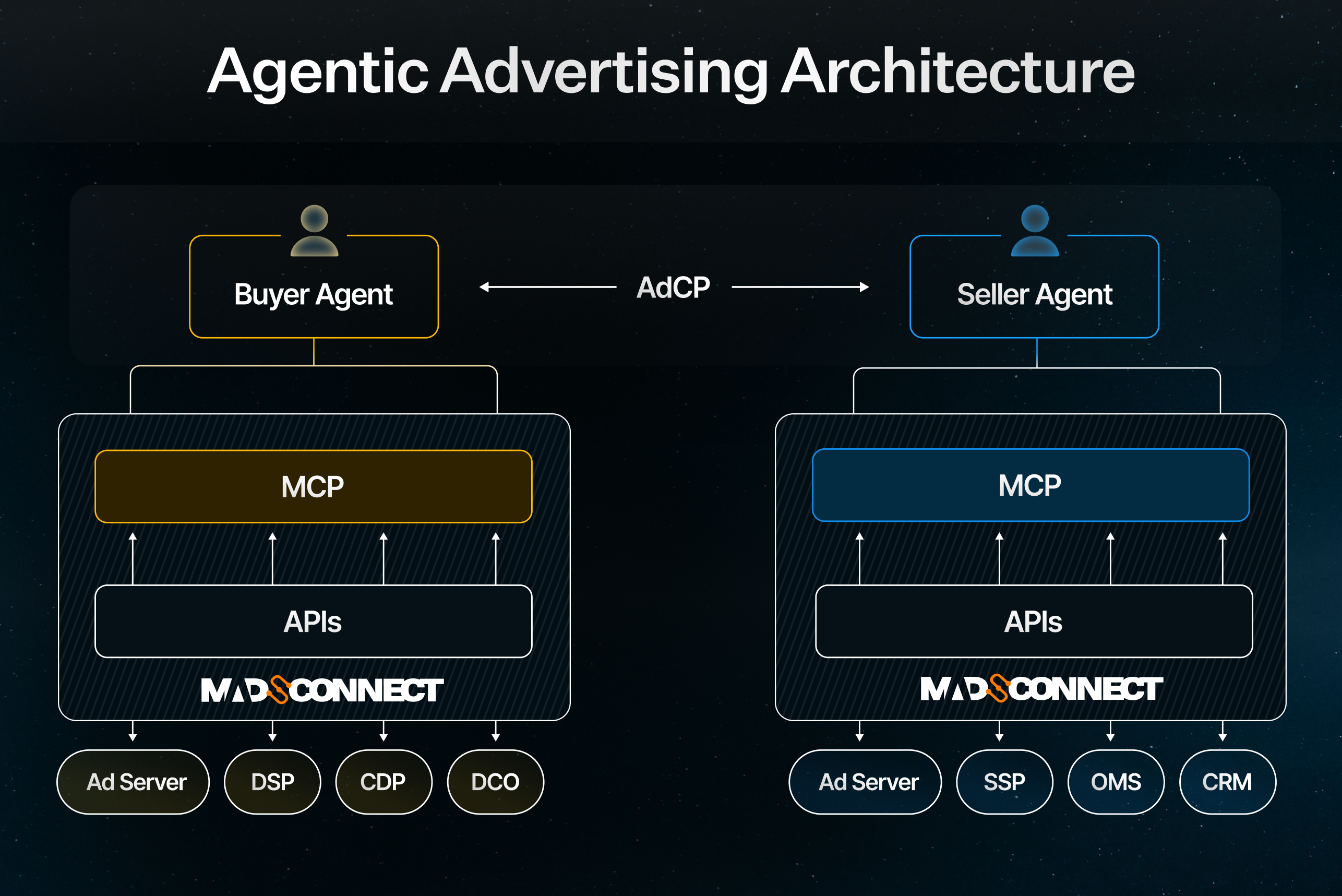
- Share intelligence in real time without losing context (More on the Model Context Protocol here).
- Learn collectively from outcomes
- Activate across the full ecosystem, from planning through execution
The Foundational Work That Comes First
That requires more than APIs or middleware. It demands data that is standardized, interoperable, and consumable, especially across buyer and seller environments where fragmentation runs deepest. No amount of automation can compensate for data that systems can’t easily access or understand. And today, that’s exactly where most enterprises find themselves.
Rather than chasing the latest AI tools, enterprises need to prioritize foundational work:
- Rationalize bloated tech stacks. Most organizations are running redundant systems that create unnecessary complexity. Simplification isn’t sexy, but it’s essential.
- Eliminate data silos. Centralization isn’t always the answer, but discoverability and accessibility are non-negotiable.
- Establish shared taxonomies. Agents can’t collaborate if they’re speaking different languages. Common definitions and standards enable clean handoffs.
- Improve data consumability. Data needs to be structured, documented, and accessible in formats that both humans and machines can use.
- Build integration layers that scale. Point-to-point connections don’t cut it. Enterprises need infrastructure that supports dynamic, real-time connectivity without breaking under load.
It’s not flashy, but it’s transformational.
The Pragmatic Path Forward
Agentic AI doesn’t begin with smarter agents. It begins with cleaner, connected systems. Companies that invest now in connectivity and data readiness will move faster, operate more resiliently, and generate higher-quality insights. More importantly, they’ll empower their people, using AI to elevate work, not replace it.
The real question isn’t whether your organization is ready for AI agents. It’s whether your data and technology ecosystem is ready to support them. Because without that foundation, even the most advanced agents will struggle to deliver on their promise.